
About 2 min read
Put one book on a table. Now add a second. In English, you change book to books. In Swahili, the change can ripple beyond the noun. A tiny prefix becomes a trail you can follow through a sentence.
Find the pattern
Kitabu is a book; vitabu are books. Compare another pair: kiti, a chair, and viti, chairs. The recurring ki–vi pattern belongs to a system of noun classes. The University of Kansas’s Swahili materials show the same class contrast on verbs: Kiti kilivunjwa means “The chair was broken”; Viti vilivunjwa means “The chairs were broken”.
Notice what happened. Number changed on the noun, but a related form changed on the verb too. Grammar is connecting the pieces, rather than treating each word as a separate label.
More than a plural rule
The key idea is agreement: the grammatical class of a noun influences forms elsewhere. Linguistic traditions sometimes use “gender” and “noun class” for comparable systems. Here, gender does not simply mean male or female. Evidence in the surrounding grammar matters more than a noun’s visible prefix alone.
Zulu, another Bantu language, offers a familiar introductory pair: umuntu, a person, and abantu, people. Its system deserves to be learned on its own terms. Related languages can share a grammatical idea without sharing every class or agreement form.
Try a different way of learning
Instead of collecting isolated dictionary entries, keep a small notebook of singular–plural pairs and one sentence for each. Circle the pieces that change together. You do not need to memorise a whole class table to begin noticing the pattern.
A noun can be the start of a conversation with the rest of the sentence. Once you hear those connections, a word list starts to become a language.
Sources and further reading
- University of Kansas — Swahili noun classes
- Greville G. Corbett — Number of Genders
- Mtholeni N. Ngcobo — Zulu noun classes revisited
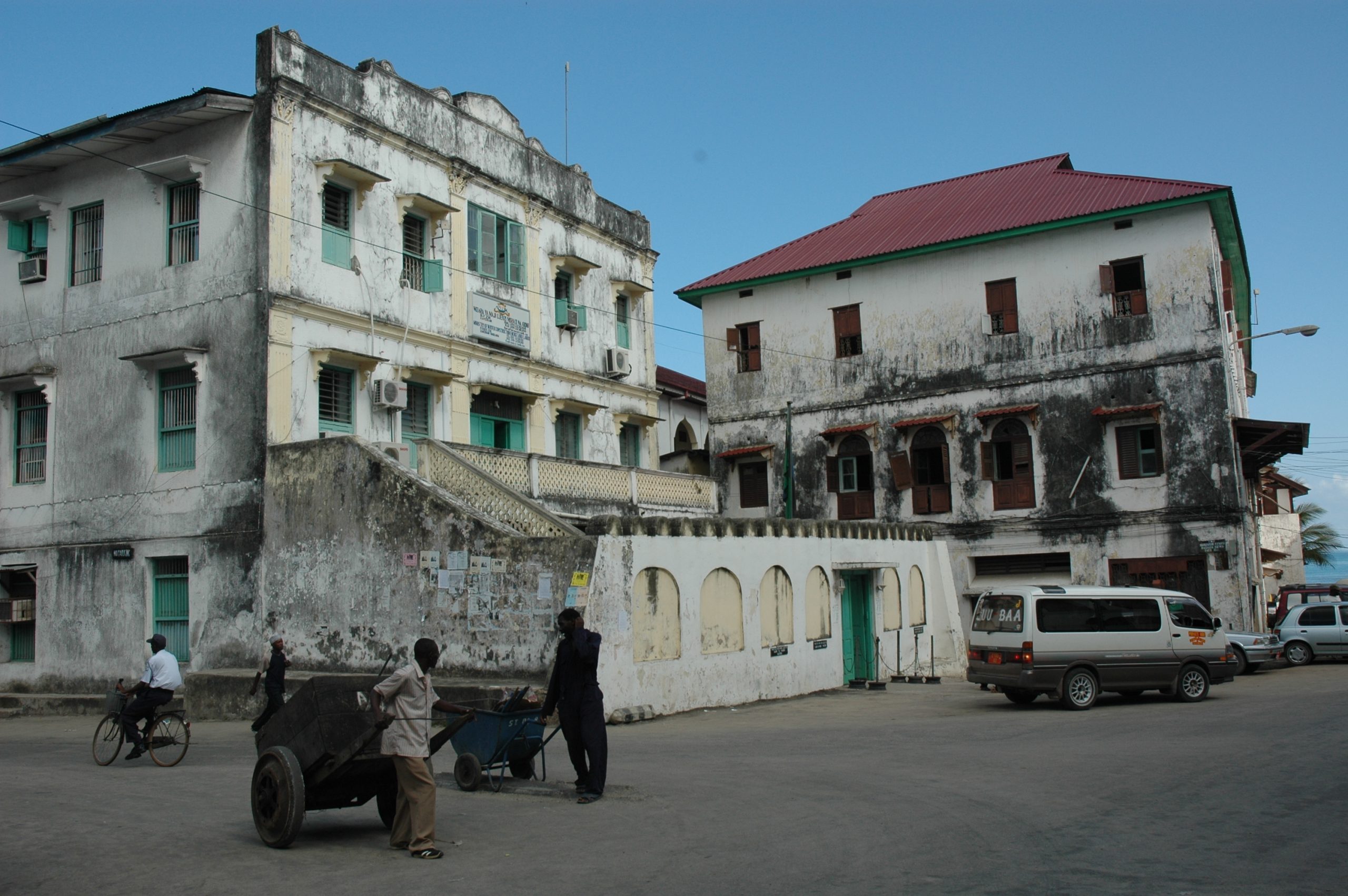
Stone Town, Zanzibar. © UNESCO / Ron Van Oers, Wikimedia Commons, CC BY-SA 3.0 IGO. Display crops may vary.
Languages in this article: Swahili · Zulu







Join the conversation