About 2 min read
Imagine a grandparent telling a story in a language the youngest person in the room understands but rarely speaks. The story has an audience. Does the language have a future? The answer cannot be read from a dictionary alone.
Start with a real place
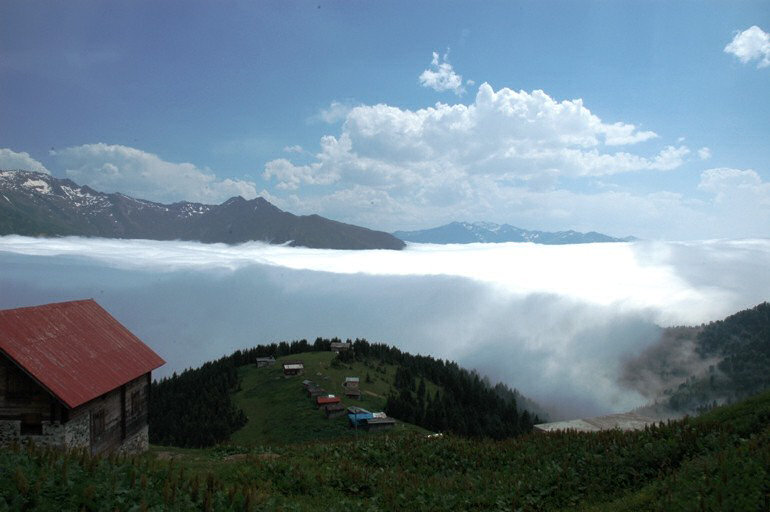
Laz is a Kartvelian language associated with the southeastern Black Sea region, including communities in northeastern Turkey and southwestern Georgia. It is related to Georgian, Mingrelian and Svan; it is not a variety of Turkish. The Endangered Languages Project includes Laz among the languages it documents.
That classification is a starting point, not a complete account of every family. Avoid treating a language community as if everybody has the same proficiency, opportunities or wishes.
A recording is valuable. A conversation is different.
UNESCO’s language-vitality framework looks beyond a headcount. Transmission between generations, domains of use, new media and learning materials all matter. A language can have recordings and still have too few occasions for children to use it with other people.
Think of the difference between owning a recipe and regularly cooking together. Documentation preserves something precious. Repeated use creates a different kind of continuity. Neither task makes the other unnecessary.
Where can the next conversation happen?
As an everyday thought experiment, list the places where a child might use a language: a kitchen, a playground, a classroom, a song, a message to a friend. Which places welcome it? Which make another language the easier choice?
Education is one part of that picture. UNESCO’s multilingual-education guidance argues for making room for learners’ languages while also providing access to wider languages of communication. Supporting Laz need not require treating Turkish as an enemy. The practical question is whether people have real opportunities to use both.
There is no universal rescue formula, and outside enthusiasm cannot replace a community’s decisions. A useful first step is to listen to speakers, ask what they want, and notice where the next conversation could begin.
Sources and further reading
- Glottolog — Laz
- Endangered Languages Project — Laz
- UNESCO — Language Vitality and Endangerment
- UNESCO — Languages matter: multilingual education
Photograph: Gardenlantern / Wikimedia Commons, CC BY 2.5.
Languages in this article: Laz · Turkish




Join the conversation