About 2 min read
A friend says, “We’re having dinner at eight.” Do you reach for your coat, or wish them a good evening? Before you decide, you need to know who belongs to that little word we.
Draw two circles
One circle contains the speaker and the person being addressed. The other contains the speaker and someone else, leaving the listener outside. English can use we for either circle. Context fills in the boundary.
Languages with an inclusive–exclusive distinction can mark that boundary in a pronoun. Inclusive means the listener is included; exclusive means the listener is not. This is about participation, not whether the speaker likes the listener.
An invitation inside the grammar
In the Quechua variety presented by the University of Texas’s Quechua Tinkuy project, ñuqanchis includes the listener and ñuqayku excludes them. The distinction also appears in the project’s verb examples. Quechua has regional varieties, so the exact forms here should not be projected onto every speaker.
Tok Pisin, spoken in Papua New Guinea, offers another example: yumi is inclusive and mipela is exclusive. Similar grammatical solutions can occur in languages with very different histories; similarity alone does not establish close ancestry.
Read the next “we” carefully
Try the dinner sentence again. An inclusive form places the guest at the table. An exclusive form reports the host’s plans with other people. The wording does not settle every detail—time, place and tone still matter—but one possible misunderstanding has already been addressed.
Now look at a message from a company, a sports team or a family group. Who is the “we”? The exercise is useful even in a language without separate pronouns. Grammar is not only a collection of endings. It is also a way of organising relationships between the people in a conversation.
Sources and further reading
- University of Texas — Quechua Tinkuy: Personal Pronouns
- Geoffrey P. Smith — Tok Pisin
- Michael Cysouw — Inclusive/Exclusive Distinction
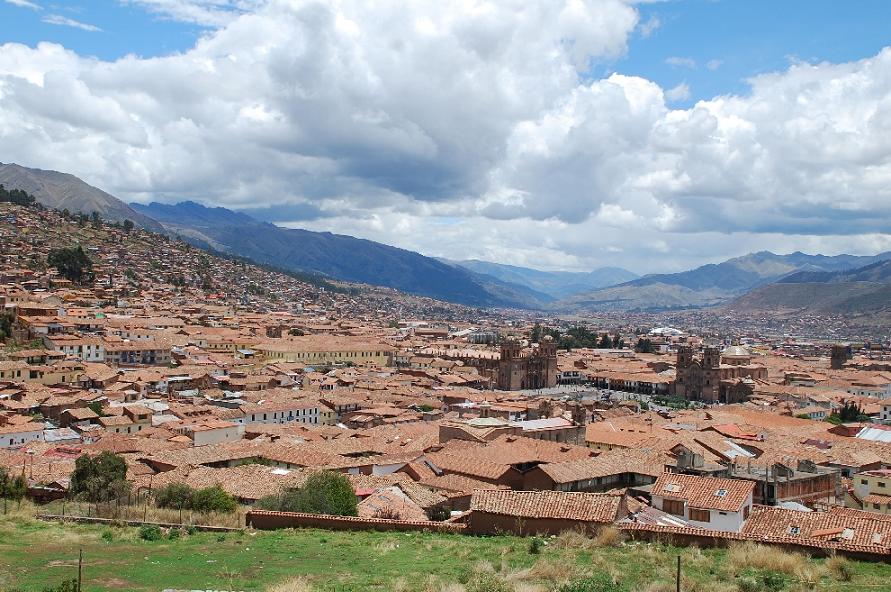
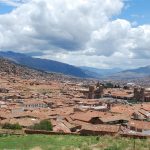
Cusco, Peru. Sascha Grabow / Wikimedia Commons, CC BY-SA 3.0. Display crops may vary.
Languages in this article: Quechua · Tok Pisin · English






Join the conversation